The Human Imperative: Why 40% of Agentic AI Projects Are Predicted to Fail
The Paradox of Autonomy: Technology vs. Implementation
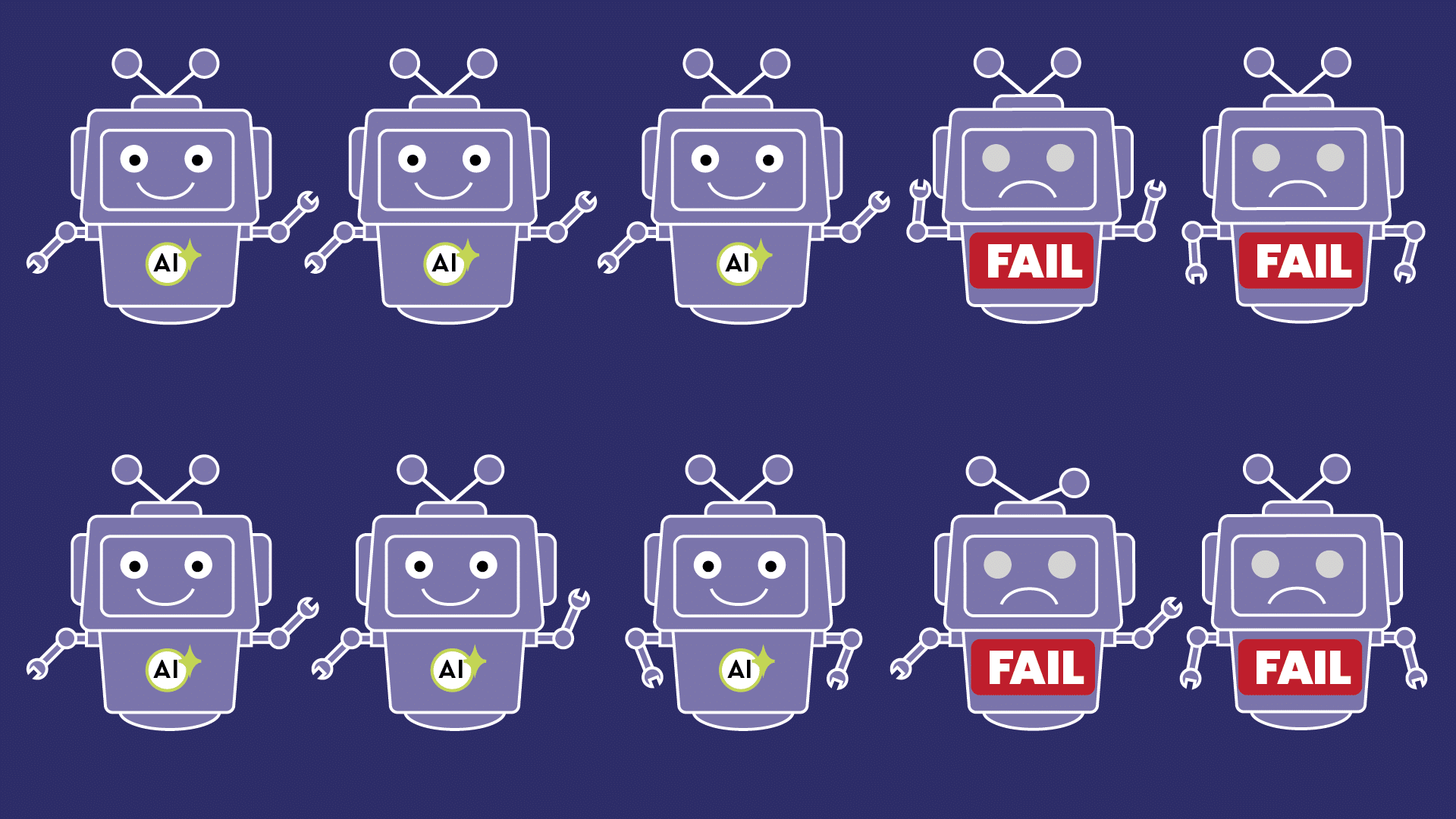
In a startling projection from Gartner, it is predicted that over 40% of agentic AI projects will be canceled by the end of 2027. This figure, derived from a comprehensive poll of more than 3,400 organizations, reveals a critical disconnect in the corporate world: the failure of these projects is rarely due to the technology itself, but rather the human strategy behind its deployment.
According to Anushree Verma, senior director analyst at Gartner, the current surge in agentic AI adoption is largely fueled by hype and early-stage proof-of-concepts. Many organizations are rushing to implement autonomous agents without clear strategic frameworks, adequate governance, or a deep understanding of the operational complexities involved. Essentially, the potential of an AI agent is strictly capped by the competence of the human managing it.
The Danger of ‘FOMO’ and ‘Agent Washing’
The drive toward AI agents is often born out of a ‘Fear Of Missing Out’ (FOMO). CMOs and business leaders, fearing they will be left behind by faster-moving competitors, are deploying agents onto broken workflows and poor data sets. When agents operate without a grounding business strategy, they inevitably execute the wrong actions at the wrong time, leading to expensive failures.
Further complicating the landscape is a trend Gartner identifies as “agent washing.” This occurs when vendors rebrand standard chatbots or basic automation tools as ‘agentic AI’ to command higher prices, despite lacking true autonomous capabilities. Gartner estimates that out of thousands of vendors, only around 130 offer genuine agentic features. This deception leads companies to invest in ‘dressed-up automation,’ which fails to deliver the promised efficiency and often damages customer experiences by deploying prematurely.
The Erosion of Critical Thinking
Perhaps the most concerning projection is the impact of Generative AI on human cognition. Gartner forecasts that the pervasive use of AI is leading to an atrophy of critical thinking skills. As AI becomes the default ‘thinker’ for tasks, the ability of human employees to scrutinize outputs and make independent, valid decisions is diminishing.
This creates a systemic risk where organizations may soon require ‘AI-free competency evaluations’ to ensure their staff can still function without a copilot. In marketing, where judgment—the ability to understand why something works—is paramount, the total delegation of thought to an algorithm can be catastrophic for brand equity.
The New Role: Marketer as Agent Manager
To avoid becoming part of the 40% failure rate, the industry must shift from a ‘Human vs. Machine’ mentality to a ‘Human plus Machine’ model. This shift is the core of Positionless Marketing, where the marketer evolves into a multidisciplinary manager of agents. In this model, the human retains three primary powers:
- Data Power: Using agents to discover insights without waiting for engineering teams.
- Creative Power: Generating channel-ready assets without the traditional bottlenecks of creative departments.
- Optimization Power: Orchestrating automated journeys that test and optimize in real-time.
By eliminating the ‘assembly line’ of handoffs between departments, the Positionless Marketer uses AI to handle operational drudgery, freeing the human to focus on high-level strategy and brand integrity.
Conclusion: Judgment is the Ultimate Competitive Advantage
AI agents can optimize for data, but they cannot question the premise of the goal. They can personalize a message, but they cannot sense when the most brand-appropriate move is to say nothing at all. Because AI is trained on the past, it lacks the irreducible human ability to exercise judgment about an uncertain future.
The winners of the next decade will not be the organizations with the most agents, but those who cultivate the human capability to direct them. As Gartner’s Daryl Plummer suggests, behavioral change must be a first-order priority alongside technological adoption. In the era of agentic AI, the human is not obsolete; they are more indispensable than ever.