The Hidden SEO Tax: Why Internal Tracking Parameters are Sabotaging Your Organic Growth
Introduction: The Invisible Friction in Your Internal Linking
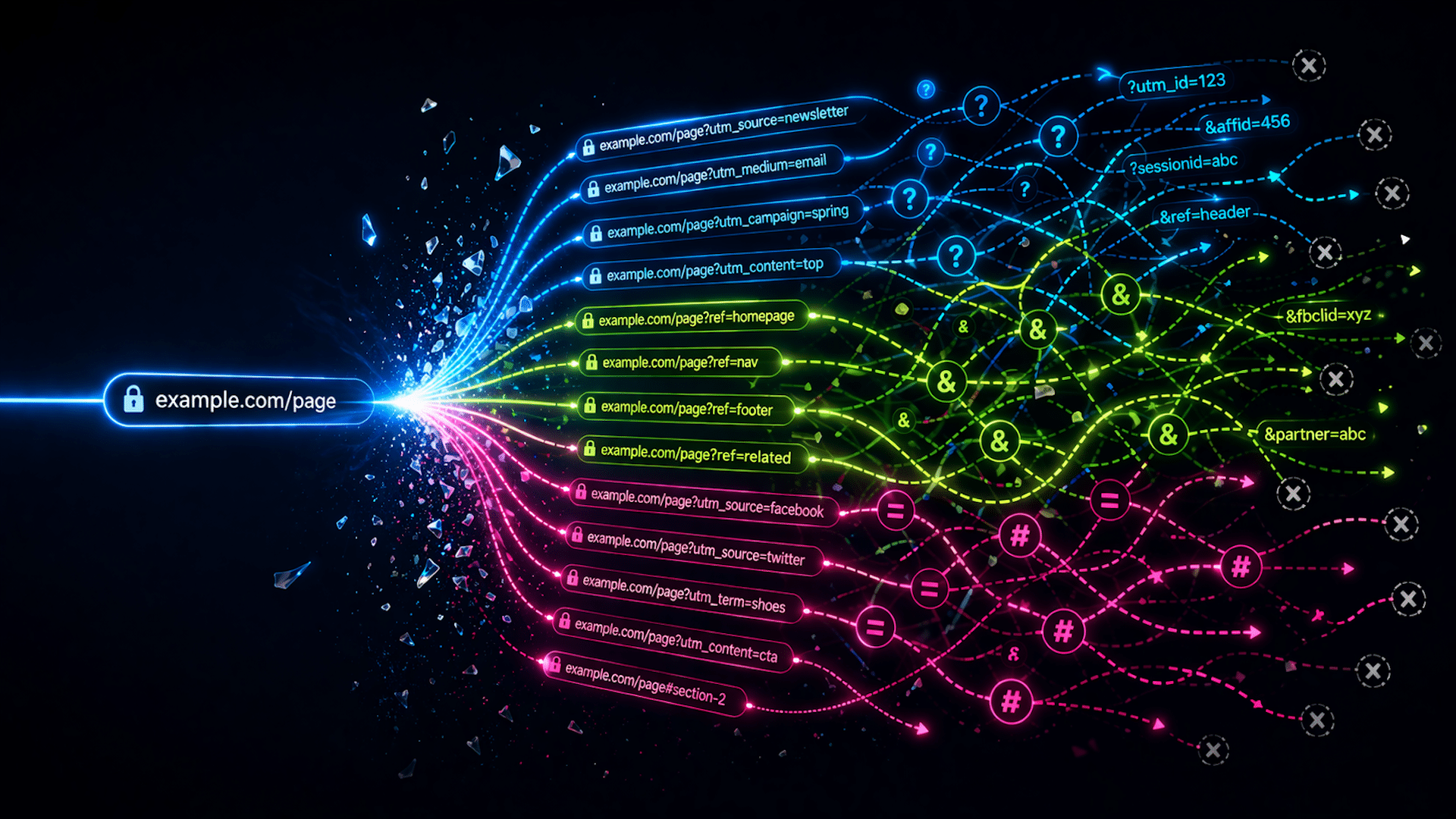
Internal linking is widely recognized as one of the most powerful and controllable levers in technical SEO. By strategically connecting pages, site owners can distribute page authority and guide users toward conversion. However, many digital marketing teams unknowingly introduce a ‘technical tax’ to this process by embedding tracking parameters—such as UTM codes, session IDs, or custom query strings—directly into internal links.
While these parameters are essential for measuring the success of external campaigns, applying them internally creates systemic inefficiencies. From bloating crawl paths to diluting link equity, these small additions to a URL can lead to significant losses in organic visibility and site performance.
The Crawl Budget Crisis: How Parameters Waste Search Engine Resources
Crawl budget is not merely about the number of requests a bot makes; it is about crawl efficacy—the speed and efficiency with which Googlebot discovers new or updated content. When internal links are parameterized, they transform a clean, linear site structure into a complex web of redundant URLs.
The Multiplication Effect
Search engines treat every unique URL as a separate entity. If a single page is linked internally via five different tracking variations, the crawler may see five different pages. This leads to several critical issues:
- Redundant Processing: Crawlers spend valuable time processing duplicate content instead of discovering new high-value ‘money pages’.
- Extended Crawl Depth: Parameters can create longer ‘hops’ for the crawler, pushing important content further away from the homepage.
- Discovery Lag: Inefficient signals dilute crawl demand, meaning updates to key pages take longer to be indexed.
The Canonical Trap: Why Tags Aren’t a Total Solution
A common industry misconception is that rel="canonical" tags negate the need for clean internal URLs. While canonicalization is vital, it operates at the indexing stage, not the discovery stage.
Even if a page has a canonical tag pointing to the clean version, Googlebot must still discover and crawl the parameterized URL first to see that tag. Consequently, the crawl budget is still consumed, and the server still handles the request. This often results in the dreaded ‘Discovered – currently not indexed’ status in Google Search Console, as the bot identifies too many low-value variants of the same page.
Fragmentation of Data and Authority
Beyond the technical crawl, internal parameters corrupt the very data they were designed to capture.
Attribution Corruption
Internal tracking parameters can break user sessions. In platforms like Google Analytics 4, clicking an internal link with campaign parameters may trigger a session reset, reattributing a conversion to an internal interaction rather than the original organic search entry point. This fractures the attribution model and makes SEO reporting unreliable.
Backlink Dilution
When internal links contain parameters, there is a high probability that users or external partners will copy and share those specific URLs. This results in external backlinks pointing to parameterized versions of a page. This splits the ‘link juice’ or authority across multiple URLs, weakening the overall backlink profile of the canonical page.
Performance Degradation and the AI Retrieval Gap
URL bloat also impacts the user experience and the emerging landscape of AI-driven search. Each parameterized URL creates a unique cache entry, straining Content Delivery Networks (CDNs) and servers.
- TTFB Impact: Excessive URL variants can degrade the Time to First Byte (TTFB), negatively affecting Core Web Vitals.
- AI Agent Friction: Modern LLM retrieval systems and AI agents often have limited rendering capabilities and rely heavily on cached content. Parameterized URLs force these agents to waste bandwidth on duplicate entries, potentially reducing the likelihood of your content being cited in AI-generated overviews.
The Structural Fix: Transitioning to DOM-Based Tracking
The solution is to move measurement from the URL layer to the Document Object Model (DOM) layer. Instead of using query strings, teams should implement HTML data attributes (data-*).
The Data Attribute Advantage
By using data-tracking-id="campaign_name" within the HTML element, tag managers (like GTM) can still capture the exact interaction and click event via JavaScript, but the actual href remains a clean, canonical URL.
Stakeholder Benefits
| Stakeholder | Benefit |
|---|---|
| SEO/Analytics | Clean URLs and unbreakable attribution. |
| Web Developers | Robust against CSS changes and easier to maintain. |
| Product Managers | No interference with screen readers or semantic HTML. |
| AI/Crawlers | Maximum efficiency in discovery and indexing. |