The Shift from Clicks to Influence
In the era of Generative AI and AI Overviews, the traditional search landscape has fundamentally shifted. As zero-click journeys become the new standard and AI influence increasingly moves off-site, legacy measurement stacks are failing. Senior marketers are finding themselves in a ‘KPI blind spot,’ where their dashboards report on clicks and traffic, but fail to capture the true value being driven by AI citations, brand mentions, and algorithmic recommendations.
Why Traditional Reporting Is Failing
For years, SEO success was measured by clicks, organic sessions, and SERP rankings. However, when a user receives a complete answer within an AI-generated summary, they no longer need to click through to your website to satisfy their intent. Consequently, traditional metrics suggest a decline in performance, even if your brand is becoming more authoritative and visible within these AI-powered results. This creates a disconnect between the actual business impact of SEO and the data being reported to leadership.
A New Framework for AI Search Measurement
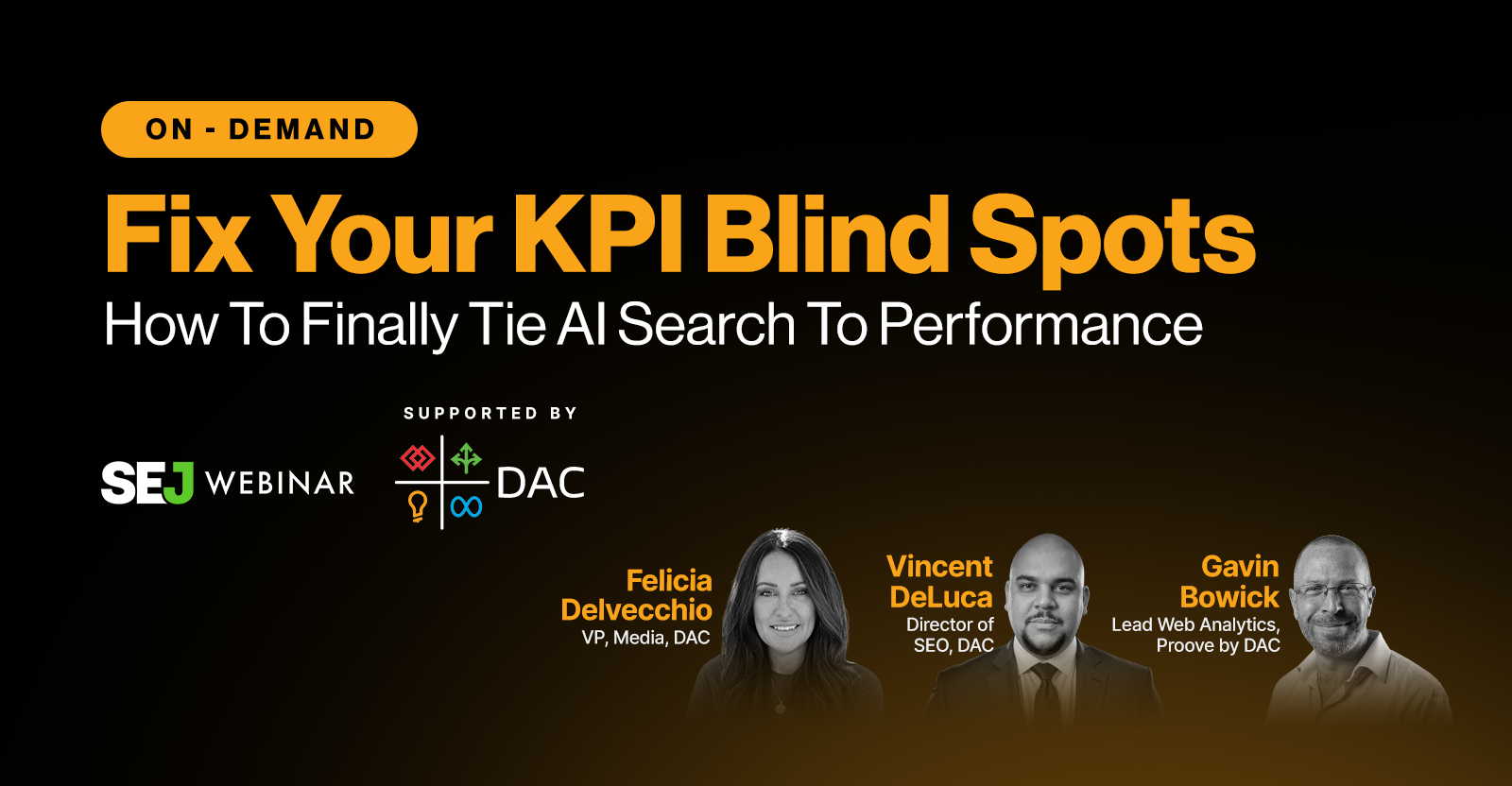
To bridge the gap between AI visibility and revenue, organizations must pivot toward a full-funnel measurement framework. As highlighted in a recent expert-led session featuring industry leaders from DAC, the solution lies in treating AI signals—such as brand citations and AI recommendations—as core conversion drivers.
The Three Pillars of Modern AI Reporting:
- Tracking AI Visibility: Rather than counting clicks, focus on quantifying how often your brand is mentioned or recommended by AI models. These are indicators of brand authority in a new, non-traditional channel.
- Connecting Signals to Revenue: Utilize Marketing Mix Modeling (MMM) and incrementality testing to correlate increases in AI visibility with shifts in broader business outcomes. By observing how organic search demand fluctuates in response to AI-driven brand presence, teams can begin to attribute revenue to these ‘zero-click’ interactions.
- The Strategic KPI Swap: It is time to replace click-centric KPIs with engagement-oriented metrics. Focus on brand share of voice in AI responses and sentiment analysis of the content being surfaced in AI Overviews.
Building Enterprise-Level Reporting
For enterprise teams, the ability to report with confidence requires a shift in mindset. You must move away from the expectation of direct click-path attribution and embrace a multi-touchpoint attribution model that recognizes the role of AI in the top-of-funnel discovery process.
By integrating these modern measurement techniques, marketers can stop fighting against the limitations of their existing dashboards and start demonstrating the tangible, bottom-line impact of their AI search strategy. It is no longer about how many users clicked; it is about how many customers were influenced by your brand’s presence in the new, AI-driven search ecosystem.