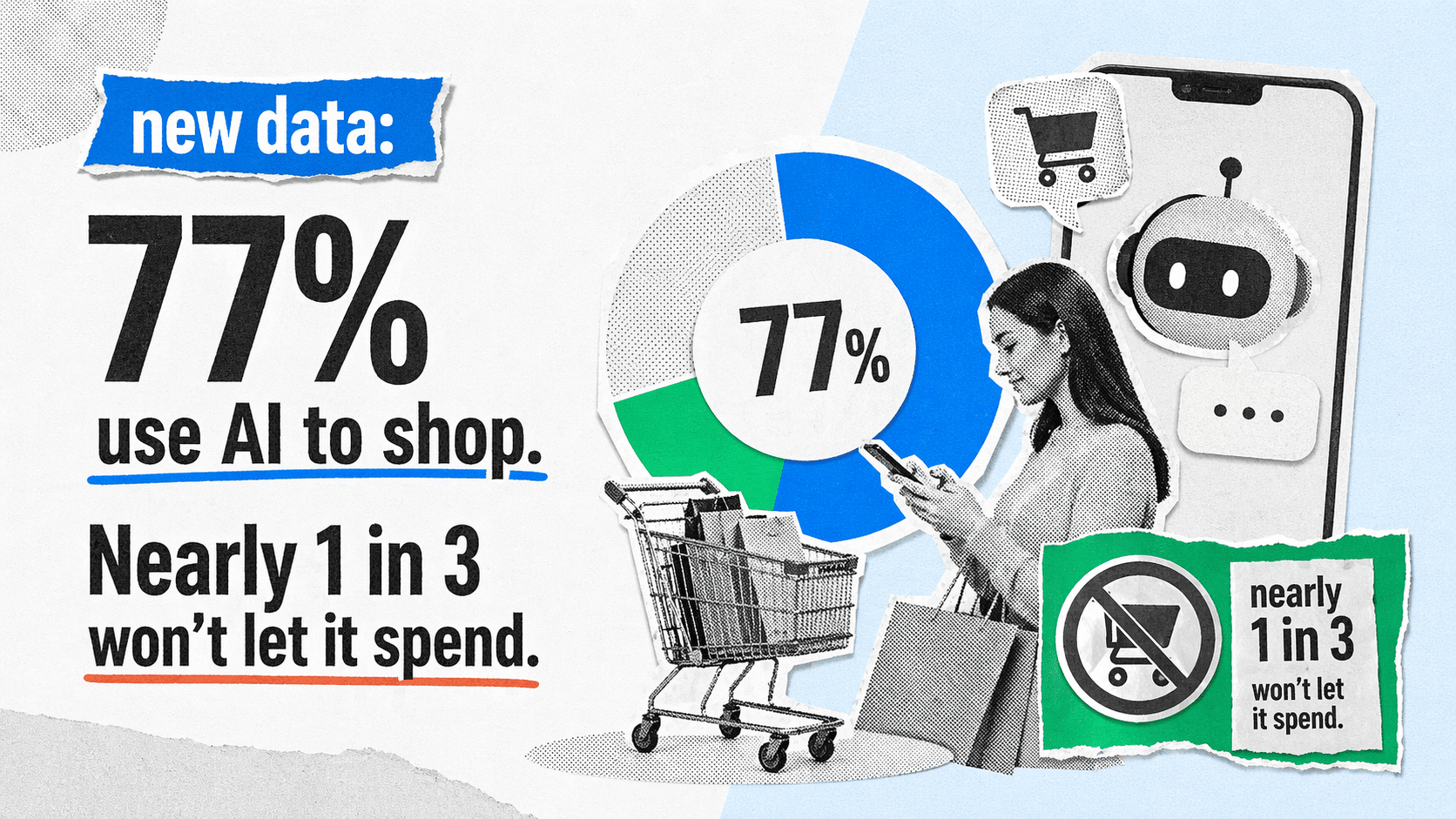
The AI Commerce Paradox: 77% of Consumers Use AI to Shop, But Trust Drops to Zero at Checkout
The Rapid Rise of AI-Driven Shopping
Artificial Intelligence has transitioned from a futuristic novelty to a weekly staple in the modern consumer’s shopping routine. According to new research from Exploding Topics, a proprietary survey of 1,009 US consumers reveals that 77.6% of shoppers have utilized AI tools to assist with purchasing decisions in the last six months. Even more striking is the frequency of use: 43.21% of respondents now integrate AI into their shopping habits at least once a week.
The adoption is not limited to the tech-savvy youth; over half of consumers aged 60+ have embraced AI for commerce, signaling a generational shift in how products are discovered and compared.
How AI is Transforming the Research Phase
The data underscores that AI’s current strength lies in the ‘discovery’ and ‘evaluation’ phases of the buyer’s journey. The most common use cases include:
- Product Research: 68.5% of users leverage AI to dig into product specifications and options.
- Price Optimization: 55.19% use AI to hunt for the best deals and price comparisons.
- Decision Support: Consumers frequently use AI to decide between competing brands, generate gift ideas, and summarize voluminous customer reviews.
In terms of categories, AI is most prevalent in clothing and technology purchases, though nearly 45% of users have applied these tools to something as routine as grocery shopping.
The Tool Landscape: ChatGPT and Gemini Lead the Way
While several LLMs are in play, ChatGPT remains the dominant force with 77.56% market share among AI shoppers. However, Google Gemini is emerging as a formidable competitor, utilized by 58.21% of shoppers. Gemini’s integration into Google Search and AI Overviews makes it a natural choice for those transitioning from traditional search to AI-assisted research.
The ‘Red Line’: Why Trust Vanishes at Checkout
Despite the high adoption rate for research, the study identifies a stark “red line” where consumer trust evaporates: the moment of financial transaction. While users love AI for finding the best product, they are overwhelmingly reluctant to let it handle the payment.
The Failure of ‘Instant Checkout’
Innovations like ChatGPT’s Instant Checkout and Google’s AP2 protocol for agent-led payments aim to remove friction by allowing AI agents to complete purchases on a user’s behalf. However, the research shows a deep-seated suspicion toward these features. 41.08% of users described themselves as “skeptical” and 33.10% as “suspicious” of autonomous purchasing tools.
This distrust is so potent that it is actually deterring new users. Nearly 45% of people who do not use AI for shopping said that the prospect of autonomous AI spending makes them less likely to try the technology.
The $0 Trust Threshold
The most damning statistic in the report is the spending cap. When asked how much they would trust an AI agent to spend autonomously, the mode average was $0. While the median cap was $50, a staggering 31.21% of consumers would not authorize any autonomous spend whatsoever.
Critical Implications for Retailers and Brands
For businesses, this data highlights a critical transition period in e-commerce. We are entering an era of “Agentic Commerce” where the path to purchase is increasingly mediated by AI.
The Importance of GEO (Generative Engine Optimization)
With nearly 45% of shoppers using AI as their primary starting point for product discovery, brand visibility in AI responses (GEO) is now as critical as traditional SEO. If a brand is not mentioned by an AI agent during the research phase, they are effectively invisible to a massive segment of the market.
The Sentiment Gap
The study also reveals a crisis of confidence regarding who these tools actually serve. Only 14.16% of respondents believe AI shopping tools are designed primarily to serve the consumer. Instead, the majority believe the technology serves the interests of AI companies (27.52%) and advertisers (27.32%).
Looking Toward 2031
Despite the current trust gap, the trajectory is clear. 55.83% of consumers expect AI to play a significantly larger role in their shopping habits over the next five years. As AI companies refine their security protocols and prove their reliability, the barrier to autonomous spending may eventually lower, but for now, the human remains the ultimate gatekeeper of the wallet.