AI Search Visibility: Does Prompt Variance Actually Impact Brand Mentions?
Rethinking AI Visibility: Beyond Keywords
For many digital marketers, the rise of AI-driven search has sparked a common anxiety: How do we track brand visibility when users can phrase a single query in thousands of different ways? The fear is that a minor change in wording could lead to a totally different set of AI-recommended brands. However, new research from Peec AI suggests that the reality is far more stable than many initially believed.
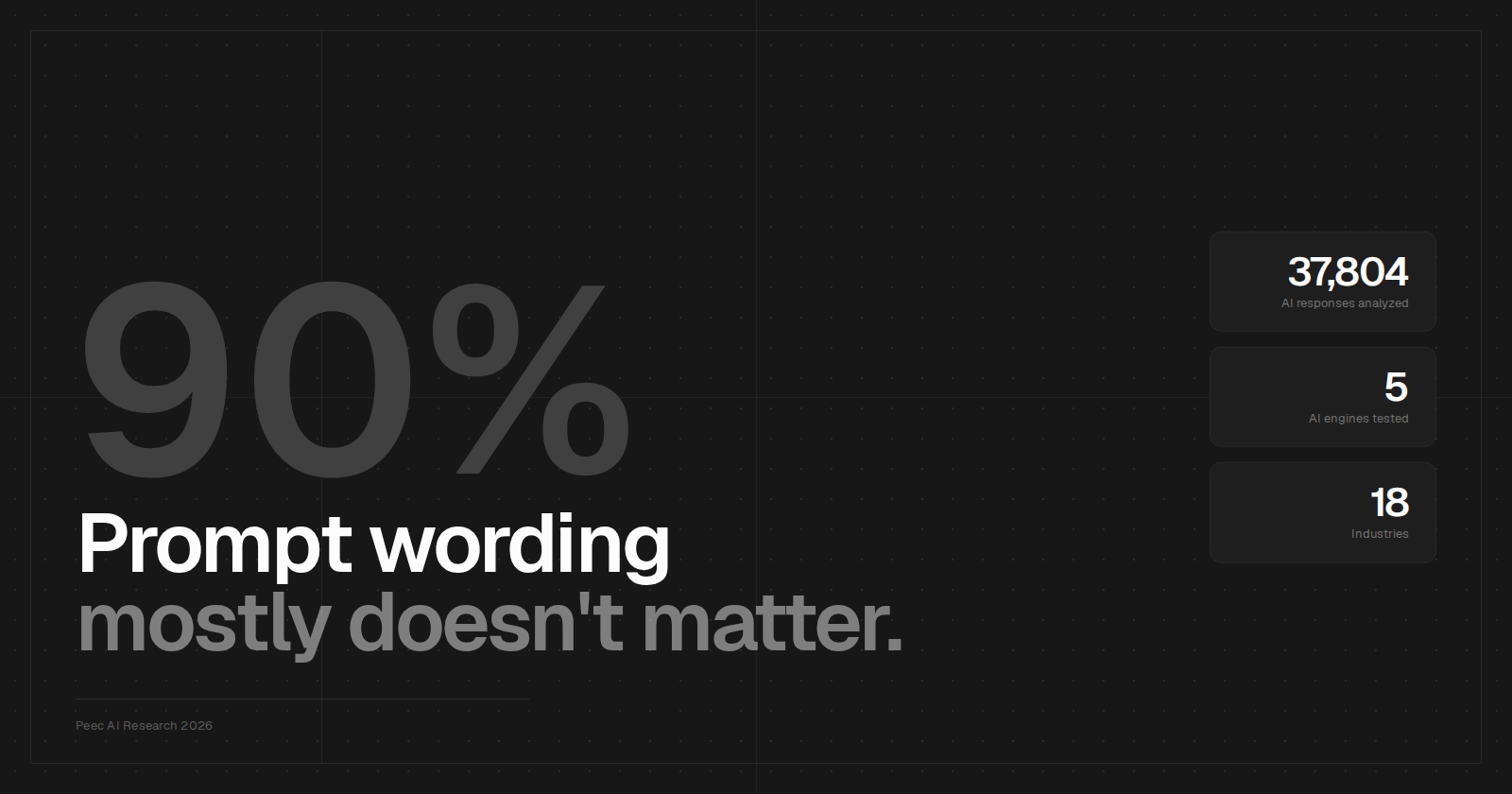
After analyzing 37,804 AI responses across five major Large Language Model (LLM) engines, the study clarifies that while human phrasing varies on the surface, the underlying intent remains highly consistent.
Understanding the Impact of Prompt Wording
The study challenges the ‘keyword-heavy’ mindset inherited from traditional SEO. Key takeaways from the research include:
- Intent Outweighs Wording: Approximately 90% of prompt variations carry the same fundamental intent. As long as that core intent remains stable, brand mentions show high consistency.
- The Threshold Effect: Visibility only experiences a significant drop-off when the semantic similarity of a prompt falls below a specific threshold (generally below 0.50 on a cosine similarity scale).
- Style Drives Visibility: How you ask is as important as what you ask. Requesting a ‘table,’ ‘list,’ or ‘ranking’ can increase brand visibility by up to 20% compared to open-ended questions.
- Middle-of-Funnel Sensitivity: While top-of-funnel (category awareness) and bottom-of-funnel (branded) queries are resilient, middle-of-funnel commercial searches are highly sensitive to phrasing. This is where marketers must focus their precision.
A 6-Step Strategy for AI Measurement
To effectively track your brand’s AI footprint without chasing infinite variations, consider these actionable steps:
- Segment by Funnel Stage: Prioritize tracking efforts on middle-of-funnel queries, where wording nuances directly influence AI output.
- Anchor on Human Phrasing: Use natural language inputs rather than forcing keyword-stuffed strings.
- Tag Prompts by Format: Keep list requests, comparison queries, and open-ended prompts in separate buckets to ensure you are comparing like-for-like data.
- Monitor Constraints Carefully: In unbranded commercial searches, small additions like ‘budget’ or ‘feature requirements’ can drastically pivot the AI’s recommendation engine.
- Ignore the ‘Left Tail’: Don’t waste resources tracking outliers. Focus on the dense, semantically similar middle-ground where your audience actually lives.
- Analyze Engines Individually: Performance is not uniform across all AI models. View data per engine to avoid the distortion caused by blending inconsistent algorithm behaviors.
By moving away from chaotic keyword tracking and toward semantic intent monitoring, brands can better navigate the evolving landscape of AI search visibility.